 Add to Chrome
 Add to Firefox
 Add to Edge
ECLIPSE: An Evolutionary Computation Library for Instrumentation Prototyping in Scientific Engineering
Jan 08, 2026
Designing scientific instrumentation often requires exploring large, highly constrained design spaces using computationally expensive physics simulations. These simulators pose substantial challenges for integrating evolutionary computation (EC) into scientific design workflows. Evolutionary computation typically requires numerous design evaluations, making the integration of slow, low-throughput simulators particularly challenging, as they are optimized for accuracy and ease of use rather than throughput. We present ECLIPSE, an evolutionary computation framework built to interface directly with complex, domain-specific simulation tools while supporting flexible geometric and parametric representations of scientific hardware. ECLIPSE provides a modular architecture consisting of (1) Individuals, which encode hardware designs using domain-aware, physically constrained representations; (2) Evaluators, which prepare simulation inputs, invoke external simulators, and translate the simulator's outputs into fitness measures; and (3) Evolvers, which implement EC algorithms suitable for high-cost, limited-throughput environments. We demonstrate the utility of ECLIPSE across several active space-science applications, including evolved 3D antennas and spacecraft geometries optimized for drag reduction in very low Earth orbit. We further discuss the practical challenges encountered when coupling EC with scientific simulation workflows, including interoperability constraints, parallelization limits, and extreme evaluation costs, and outline ongoing efforts to combat these challenges. ECLIPSE enables interdisciplinary teams of physicists, engineers, and EC researchers to collaboratively explore unconventional designs for scientific hardware while leveraging existing domain-specific simulation software.

Evolving Antennas for Ultra-High Energy Neutrino Detection
May 15, 2020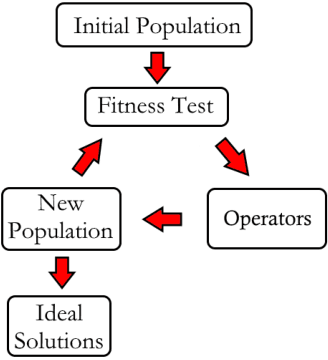
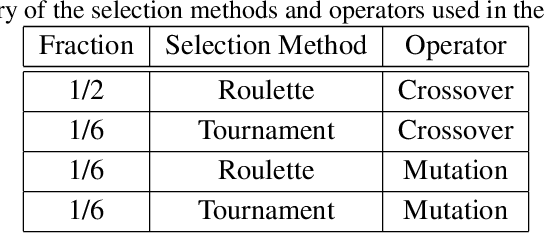
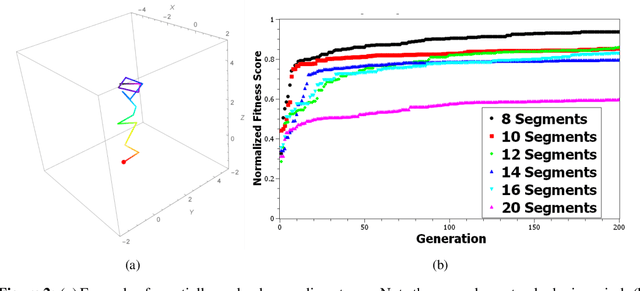
Evolutionary algorithms borrow from biology the concepts of mutation and selection in order to evolve optimized solutions to known problems. The GENETIS collaboration is developing genetic algorithms for designing antennas that are more sensitive to ultra-high energy neutrino induced radio pulses than current designs. There are three aspects of this investigation. The first is to evolve simple wire antennas to test the concept and different algorithms. Second, optimized antenna response patterns are evolved for a given array geometry. Finally, antennas themselves are evolved using neutrino sensitivity as a measure of fitness. This is achieved by integrating the XFdtd finite-difference time-domain modeling program with simulations of neutrino experiments.